ELV take-off, BOQ and estimating, written by engineers.
How ELV quantities are counted from drawings, checked, turned into a bill of quantities and priced for GCC tenders. Worked examples, stated assumptions and cited standards.
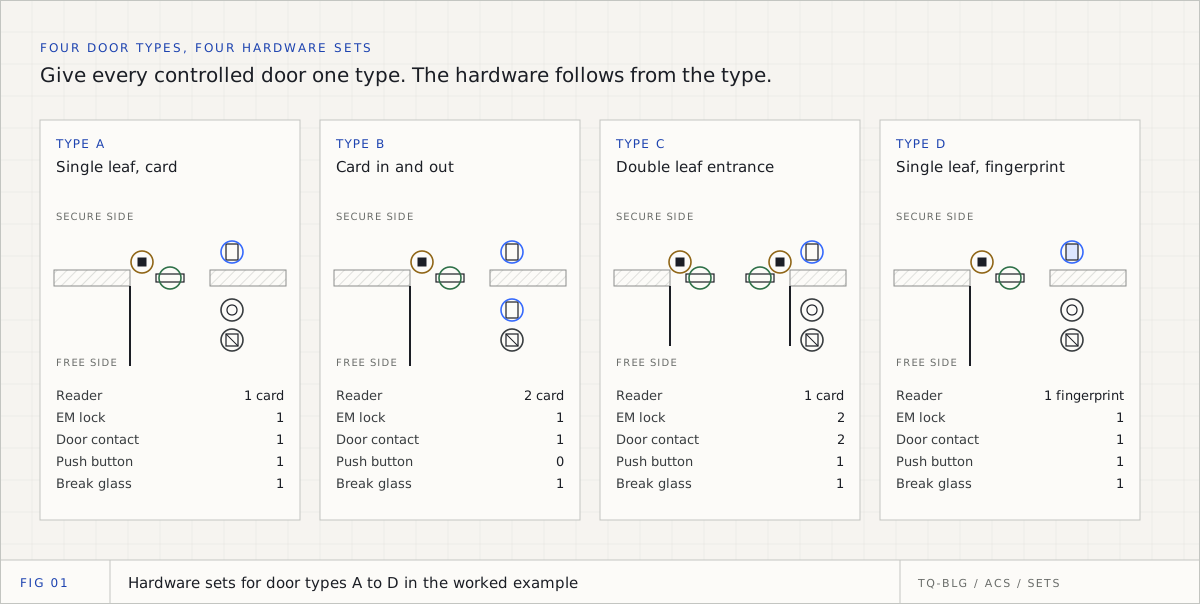
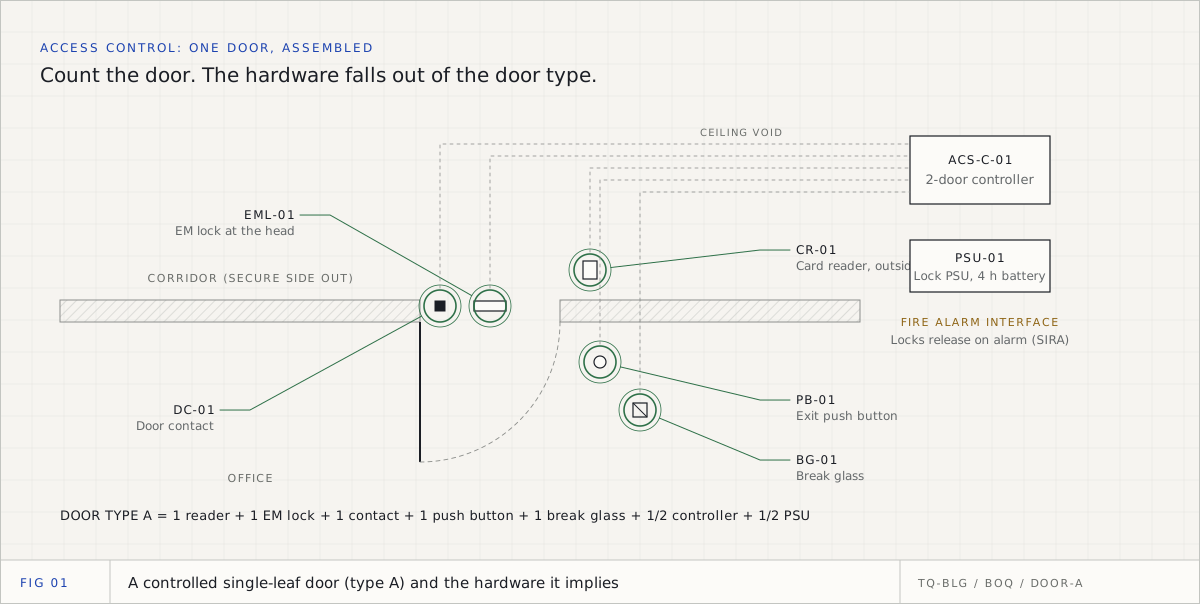
In access control the unit is the door, not the device. This is how to build hardware sets per door type, read the door schedule against the plans, count doors by type, derive controllers and power supplies, and check the result before it reaches the BOQ, with a worked 32-door example.
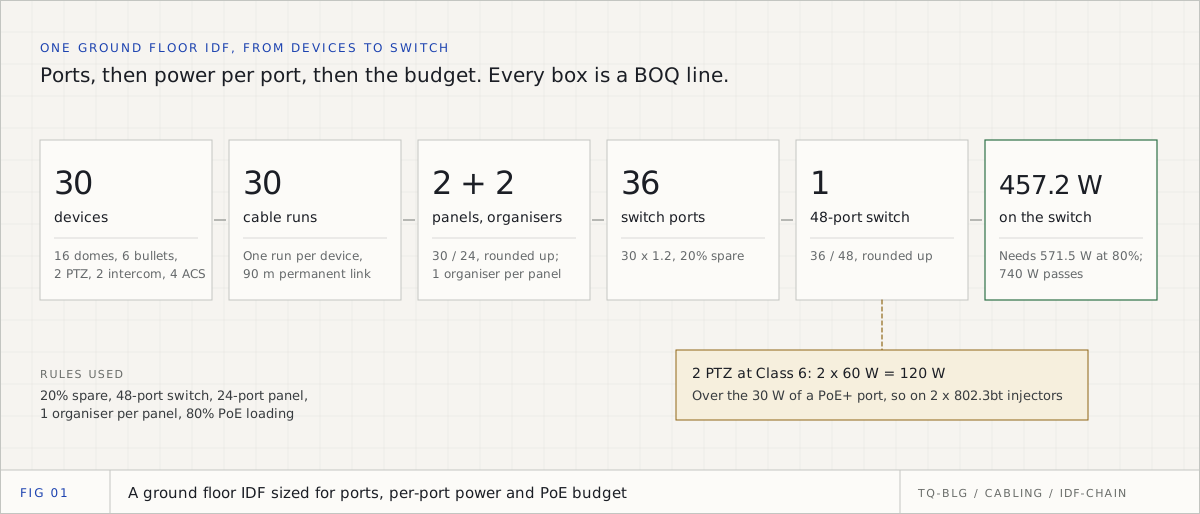
Switches for a CCTV system are sized three times over: by ports, by the power each port must give, and by the power the whole switch can give. Then the patch panels, organisers and rack follow. One ground floor IDF, worked through with the IEEE numbers.
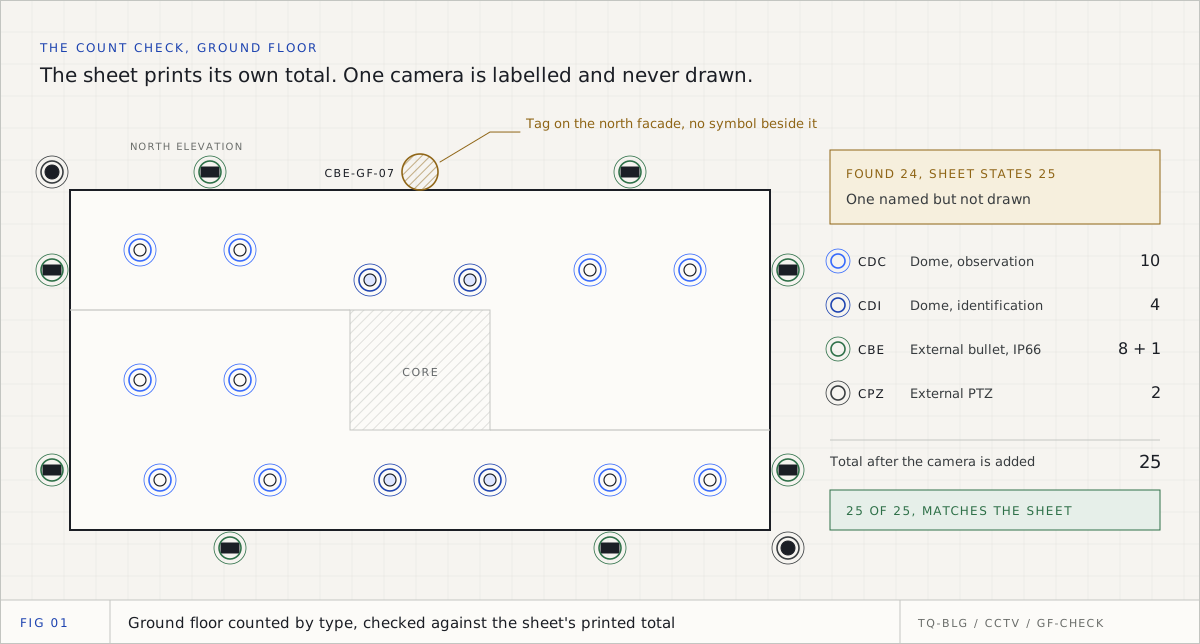
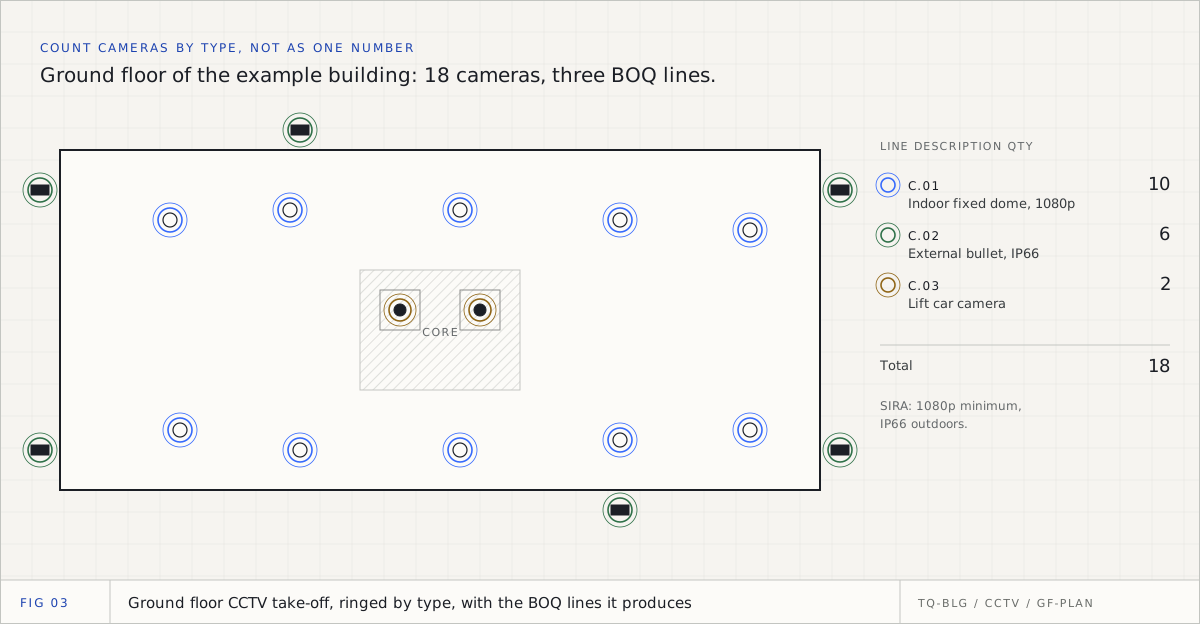
A CCTV take-off is not one number. It is a count of every camera by type, floor by floor, read from tags, layers and legends, checked against the totals the consultant prints and approved before it is priced. This is the method, with a worked 108-camera example.
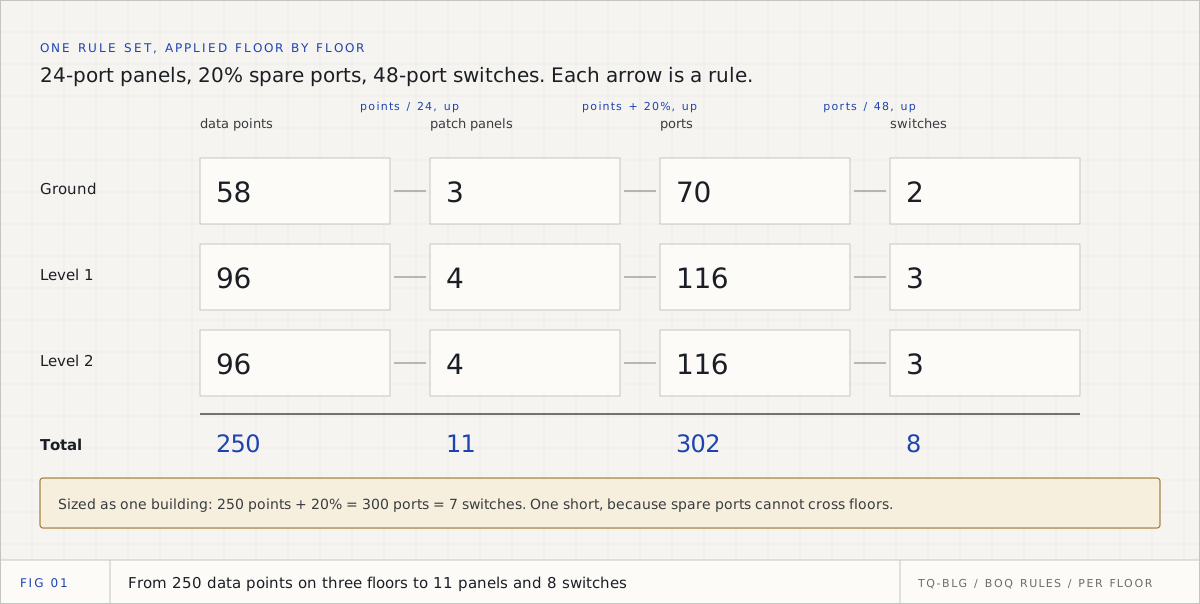
The rules that turn counted devices into switches, patch panels, organisers, backbone and cable decide most of an ELV bill. How contractors in the UAE, Saudi and Qatar write them once per firm, override them per project with a reason, and trace every derived line to its formula, with a worked example.
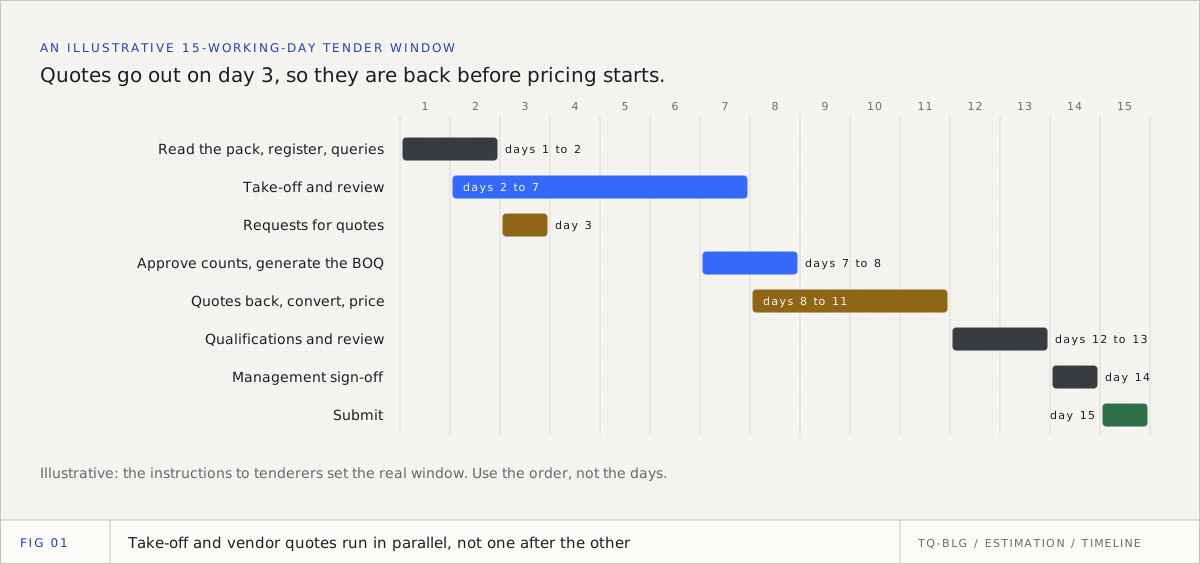
How an ELV tender is estimated in the UAE, step by step: what is in the consultant's tender pack, how the quantities are built, how USD and EUR vendor quotes become an AED price at a stated rate, VAT, quote validity, qualifications, software cost and where your drawings are stored.
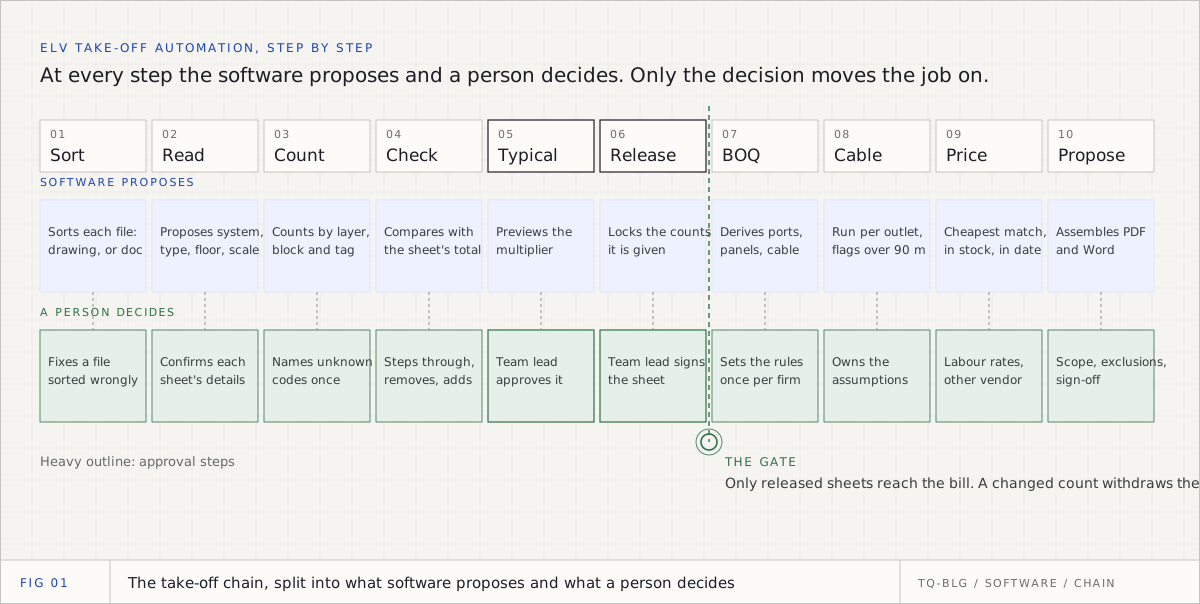
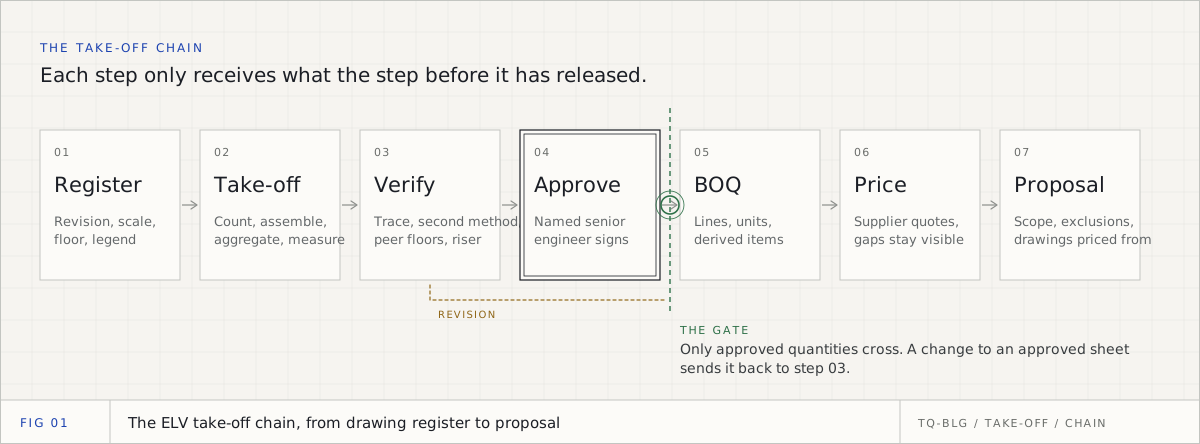
Most of an ELV and security take-off can be automated: reading the drawings, counting tagged devices, deriving ports and panels, measuring cable, finding the cheapest vendor. Deciding is not. This is the chain, step by step, with a worked example of what a single unchecked miss does to the bill.
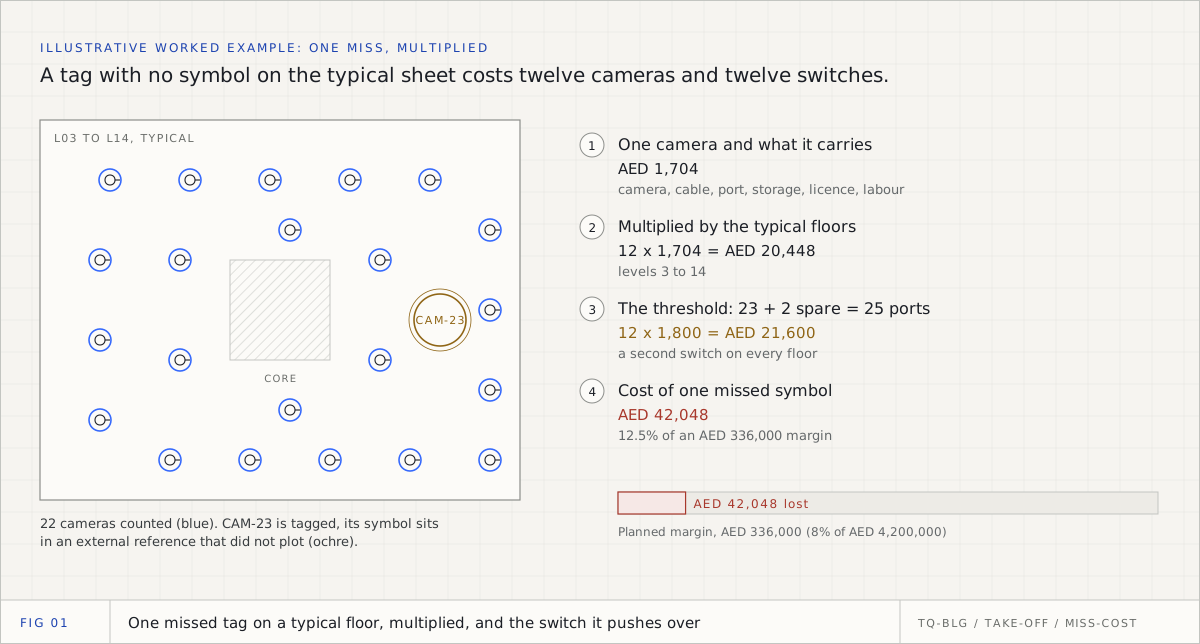
A manual ELV take-off rarely fails in a way anyone notices on the day. It fails when one missed symbol on a typical floor is multiplied twelve times and pushes a switch over its ports. This is where the misses hide, an illustrative AED example of what one costs, and the checks that catch them before the tender goes.
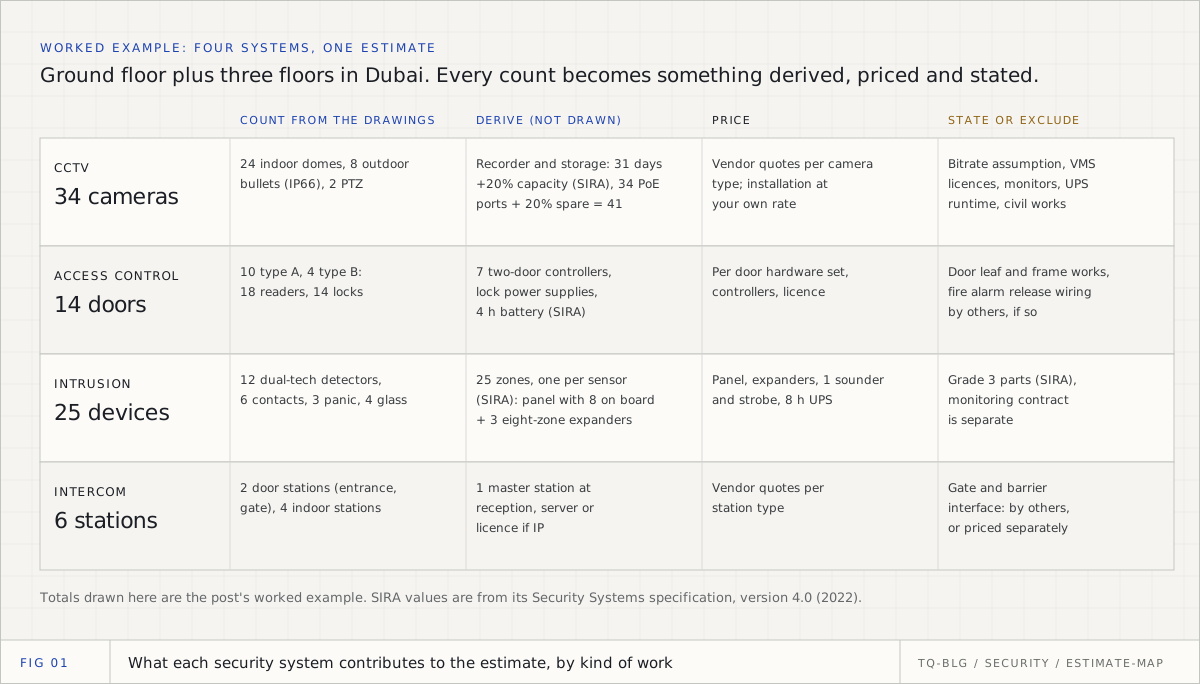
A security estimate is four kinds of work across four systems: count what is drawn, derive what is not, price both, and state what you excluded. This is the whole method for a GCC tender, with the SIRA rules that change the bill and a worked Dubai example from drawings to priced lines.
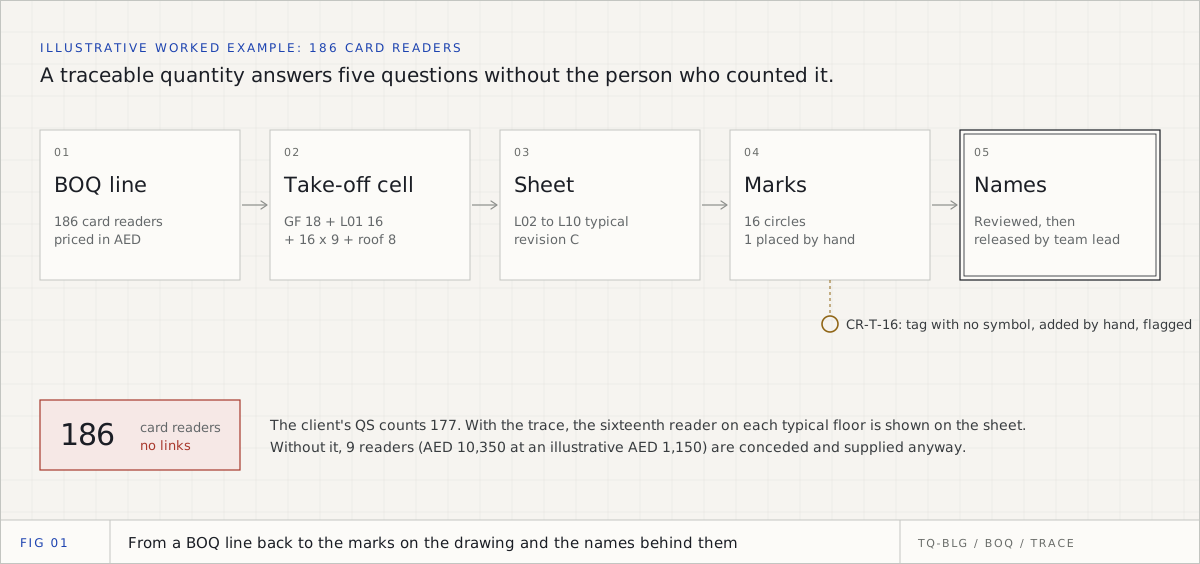
A quantity in a tender BOQ is challenged at least once: by the consultant, by procurement, in a variation or at final account. A number that traces to marks on a drawing and a named approver settles the question in minutes. A total from a black box, however accurate it claims to be, starts an argument.
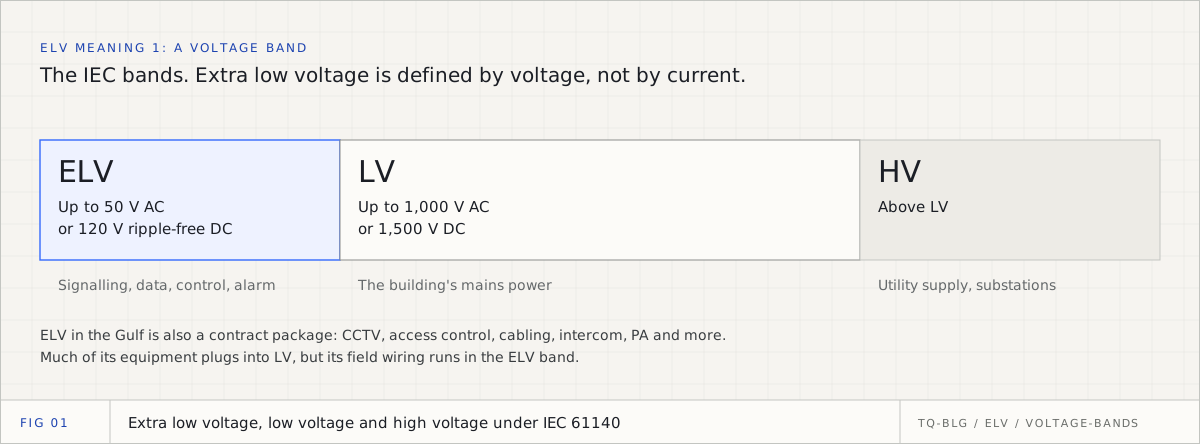
ELV means two things. To an electrical engineer it is a voltage band under 50 V AC. To a Gulf contractor it is a package of systems: CCTV, access control, cabling, intercom, PA and more. This explainer covers both, the list, and who designs, approves and prices them.
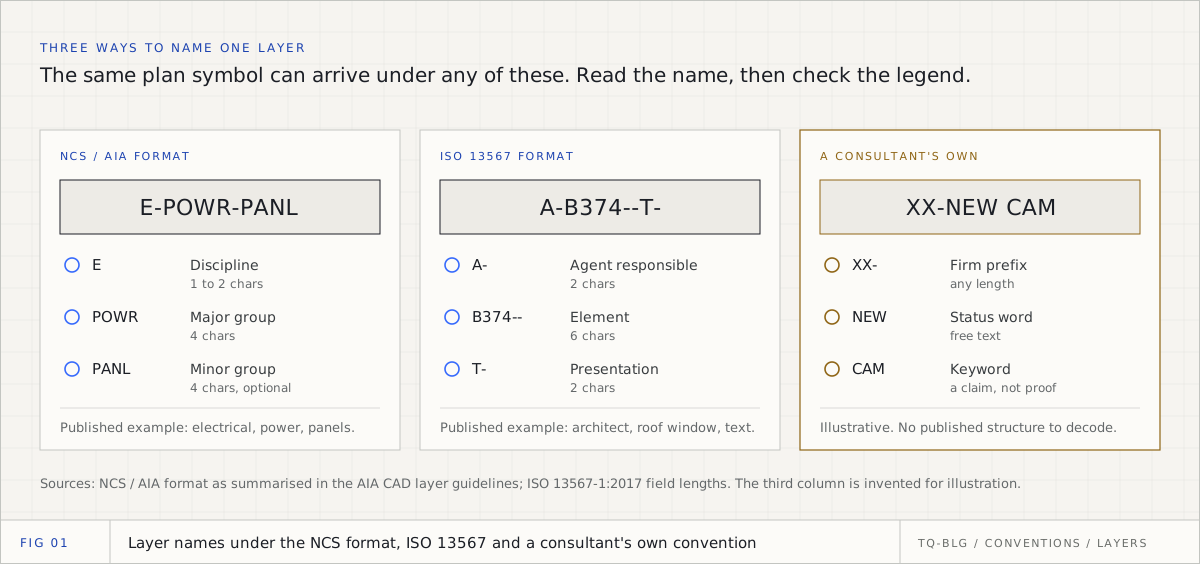
The same camera arrives on a different layer, with a different symbol and a different tag code, on every consultant's set. This is how to read a convention you have never seen, what the CAD standards say, and which evidence to trust before a device reaches the bill.
A CCTV bill of quantities in Dubai is mostly lines that are not drawn: recorders, storage, switches, power, cable, the UPS. This is how to get each one from the camera count, and which numbers SIRA fixes for you.
A worked example that takes one illustrative office building from drawings to a bill of quantities across three systems, with the basis of every number written next to it and a sample BOQ table you can reuse.
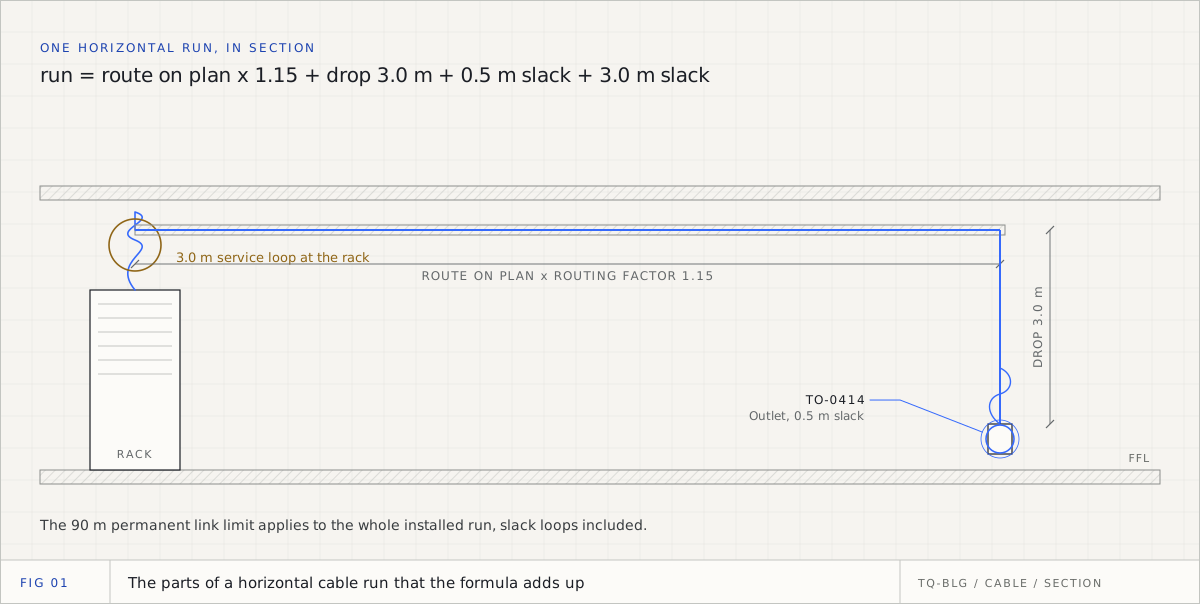
How to turn a floor plan into metres of cable and boxes to order: every term in the formula, which numbers are standards and which are habits, a worked metric example, and where fire alarm loops and PA lines need a different calculation.
An ELV take-off is not one count. It is six kinds of reasoning across CCTV, access control, cabling, fire alarm, PA and intercom, checked before any number is priced. This is the whole process, written for the engineer who has to defend it.
The real options for an ELV estimating team in the GCC, from spreadsheets to general AI take-off tools to ELV-specific software, judged on the criteria that decide an ELV purchase. Vendor facts fetched from their own pages on 14 October 2026, with links, and TrueQty assessed with its limits.
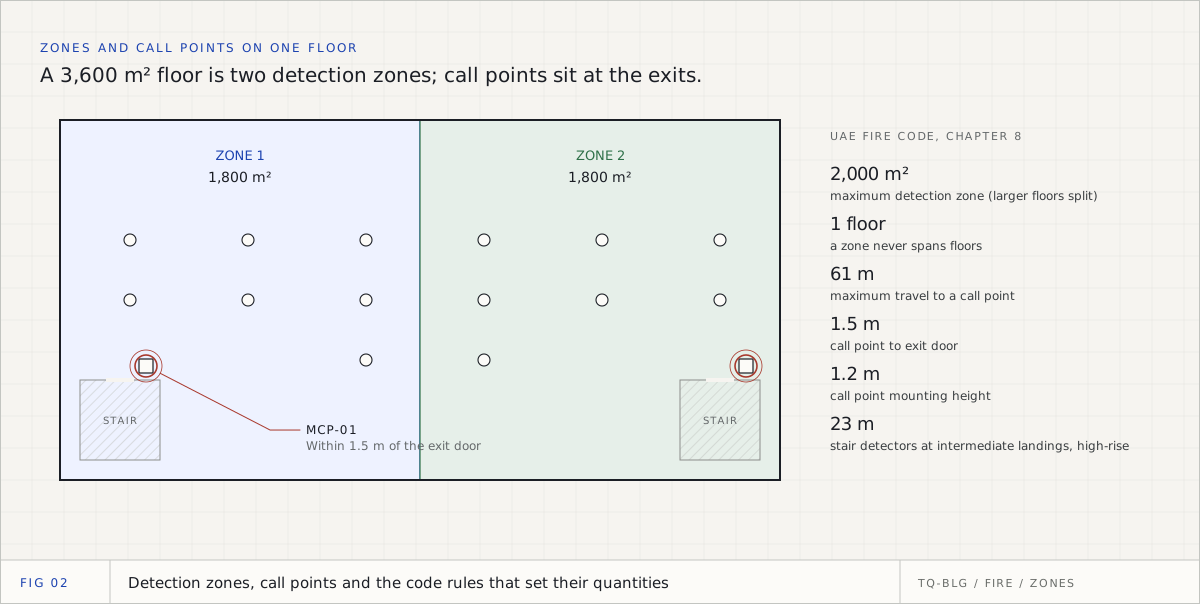
The UAE Fire and Life Safety Code decides more of a fire alarm bill than the drawing does: addressable only, Class A wiring, 2-hour rated cable, zones of 2,000 m², call points within 61 m. How to count the devices and turn the code into lines.
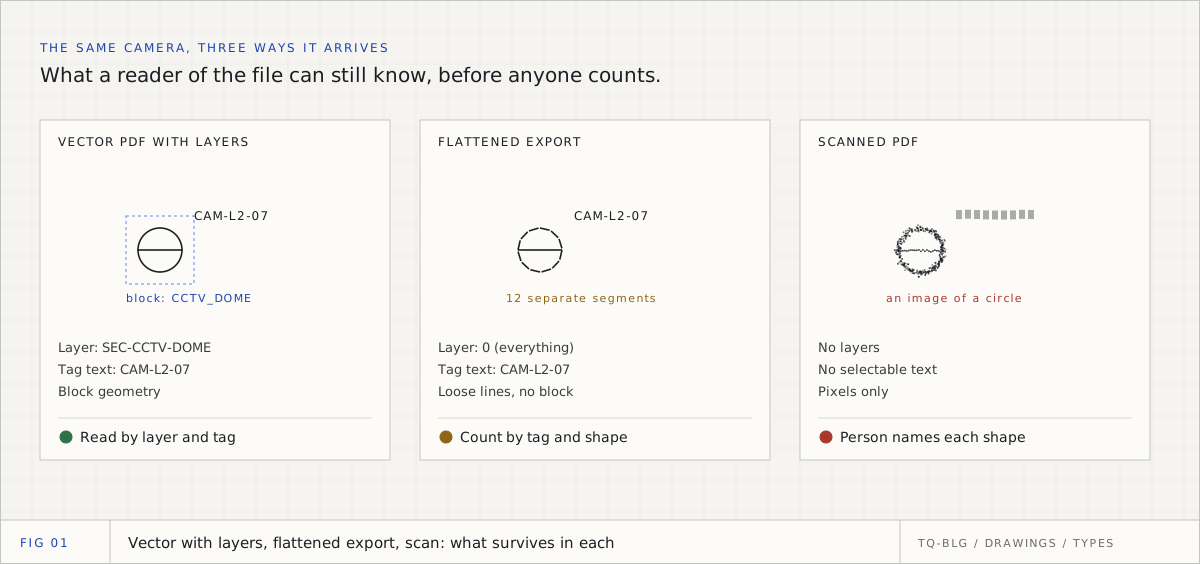
Most tender drawings are not clean CAD. This is how to diagnose a sheet before you count it, what each kind of difficult drawing loses, why automatic counting goes wrong on ELV symbols, and the checks that verify a quantity you could not count cleanly.